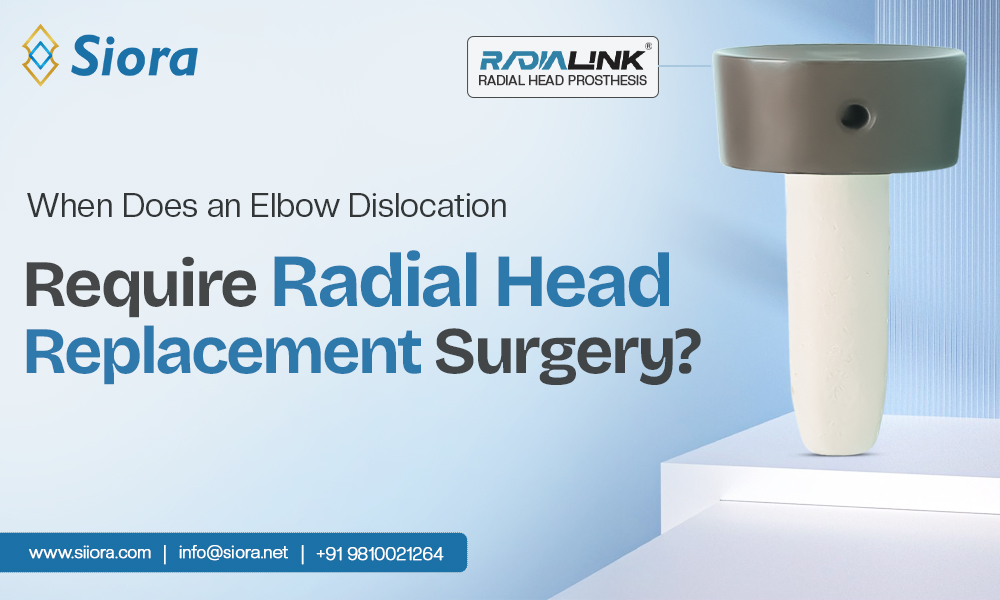
Elbow dislocations are among the most common injuries affecting the upper limb, especially after falls, sports injuries, or road accidents. While some dislocations can be managed successfully with closed reduction and rehabilitation, others involve severe damage to the surrounding bones and soft tissues. In such cases, surgery becomes necessary to restore stability and function. One procedure that orthopedic surgeons may recommend is radial head replacement surgery.
Understanding when an elbow dislocation requires radial head replacement can help patients make informed decisions about their treatment and recovery.
Understanding Elbow Dislocation
An elbow dislocation occurs when the bones forming the elbow joint are forced out of their normal alignment. The elbow joint is made up of three bones—the humerus, ulna, and radius. The radial head, located at the upper end of the radius, plays a vital role in elbow stability and forearm movement.
Simple elbow dislocations involve ligament injuries without fractures, whereas complex elbow dislocations include fractures of one or more bones around the joint. Complex injuries often require surgical intervention.
The Role of the Radial Head in Elbow Stability
The radial head acts as an important stabilizer of the elbow. It helps maintain alignment during rotational movements and supports the joint against valgus stress. Damage to this structure can significantly compromise elbow function.
When the radial head is fractured during an elbow dislocation, surgeons carefully evaluate the severity of the injury before deciding on the most appropriate treatment option.
When Is Radial Head Replacement Surgery Necessary?
Severe or Comminuted Radial Head Fractures
One of the primary reasons for performing radial head replacement is a severely shattered fracture. In some injuries, the radial head breaks into multiple small fragments, making reconstruction difficult or impossible. Attempting to fix these tiny pieces with screws or plates may not provide reliable results.
Replacing the damaged radial head with a prosthesis often offers better long-term stability and function.
Elbow Instability After Dislocation
Certain elbow dislocations cause extensive ligament injuries in addition to fractures. Even after reducing the dislocation, the joint may remain unstable. Since the radial head contributes significantly to elbow stability, replacing it can help restore joint mechanics and prevent recurrent dislocations.
Associated Ligament Damage
Complex elbow injuries frequently involve tears of the medial collateral ligament, lateral collateral ligament, or both. When significant ligament disruption accompanies a radial head fracture, preserving elbow stability becomes challenging.
In these situations, radial head replacement combined with ligament repair may provide the best outcome.
Presence of the “Terrible Triad” Injury
Orthopedic surgeons often refer to a combination of elbow dislocation, radial head fracture, and coronoid fracture as the “terrible triad” injury. This pattern is notorious for causing persistent instability and stiffness.
Radial head replacement is commonly considered in terrible triad injuries when the fractured radial head cannot be adequately repaired.
Benefits of Radial Head Replacement
Radial head arthroplasty offers several advantages in appropriately selected patients, including:
- Improved elbow stability
- Early initiation of rehabilitation exercises
- Restoration of forearm rotation
- Reduced risk of recurrent dislocation
- Better functional outcomes in complex injuries
However, the decision to proceed with surgery depends on individual patient factors, fracture characteristics, age, activity level, and overall health.
Recovery After Surgery
Recovery following radial head replacement generally involves a structured rehabilitation program. Early controlled movement is encouraged to minimize stiffness while protecting repaired tissues. Physical therapy plays an essential role in regaining strength, flexibility, and range of motion.
Most patients gradually return to daily activities over several weeks to months, although complete recovery timelines vary from person to person.
Final Thoughts
Not every elbow dislocation requires surgery. Many uncomplicated cases heal well with non-surgical treatment. However, when the injury involves severe radial head fractures, persistent instability, significant ligament damage, or terrible triad injuries, radial head replacement surgery may be the most effective solution.
Timely evaluation by an orthopedic specialist is crucial to determine the extent of injury and choose the most appropriate treatment strategy for restoring elbow function and long-term joint health.
Explore Siora’s RADIALINK Radial Head Prosthesis and other cutting-edge orthopedic solutions at booth no.1 at the SAOA Conference 2026.

